Skip to content

2026

Cloud Storage for Musicians: What Matters for Sessions

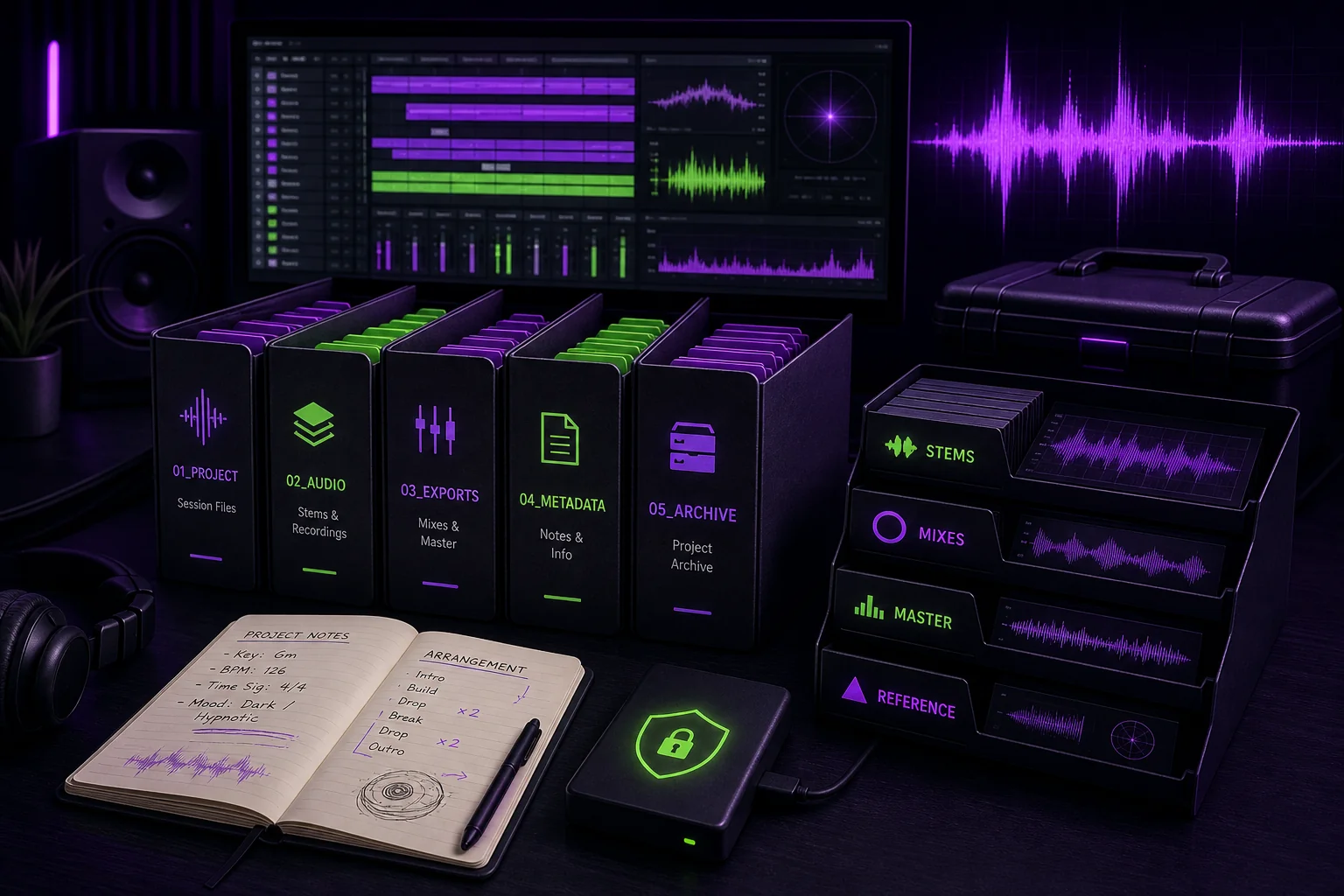
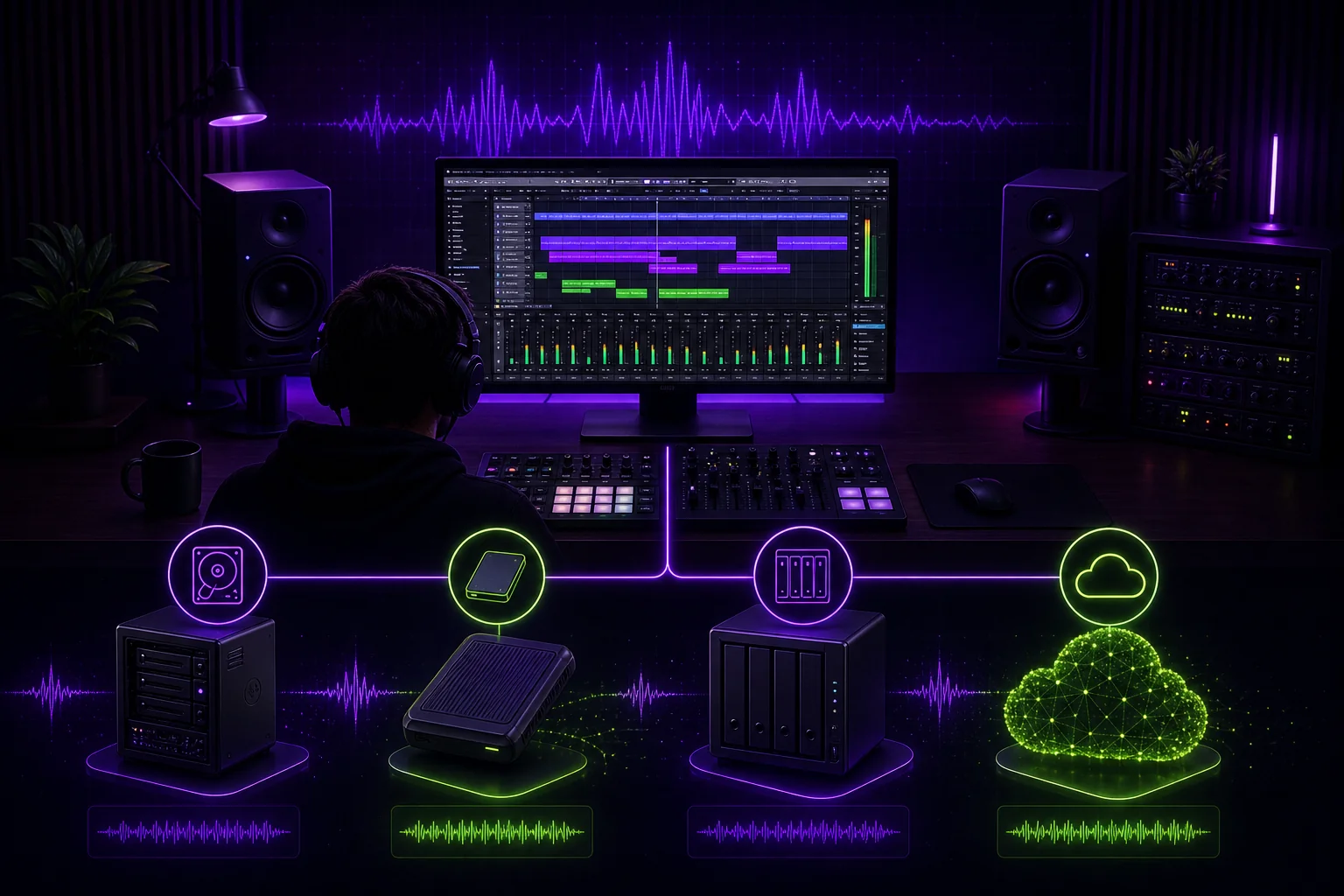
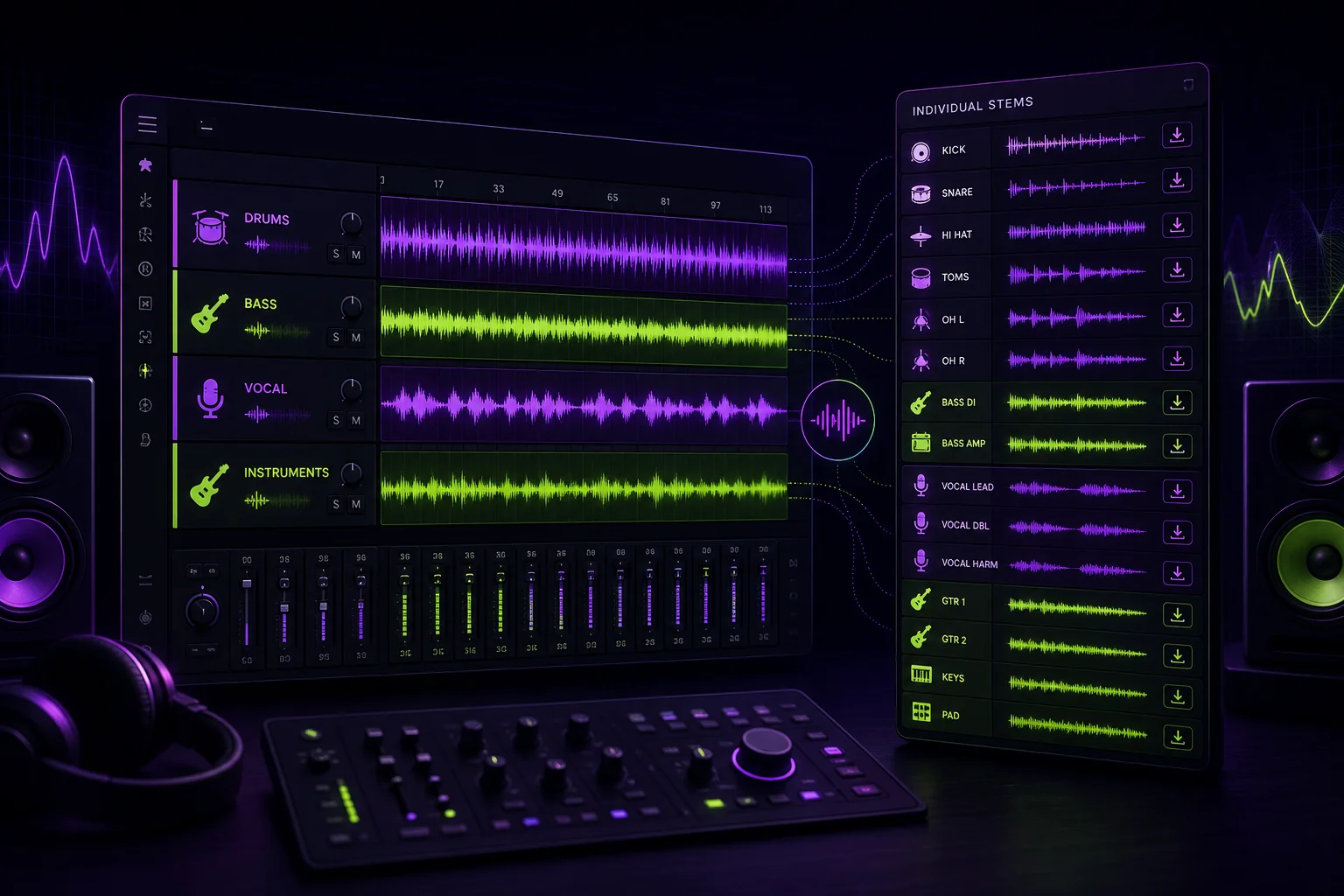
Cloud storage workspace for musicians: stems, DAW sessions and version history synced across devices

Cloud storage for musicians is not just about putting audio files online. A production session includes the DAW project, recorded files, stems, exports, notes, samples, and sometimes plug-in dependencies. If one part is missing, your collaborator may open an empty timeline and a headache.

Online Music Studio Setup: The Gear and Tools You Actually Need

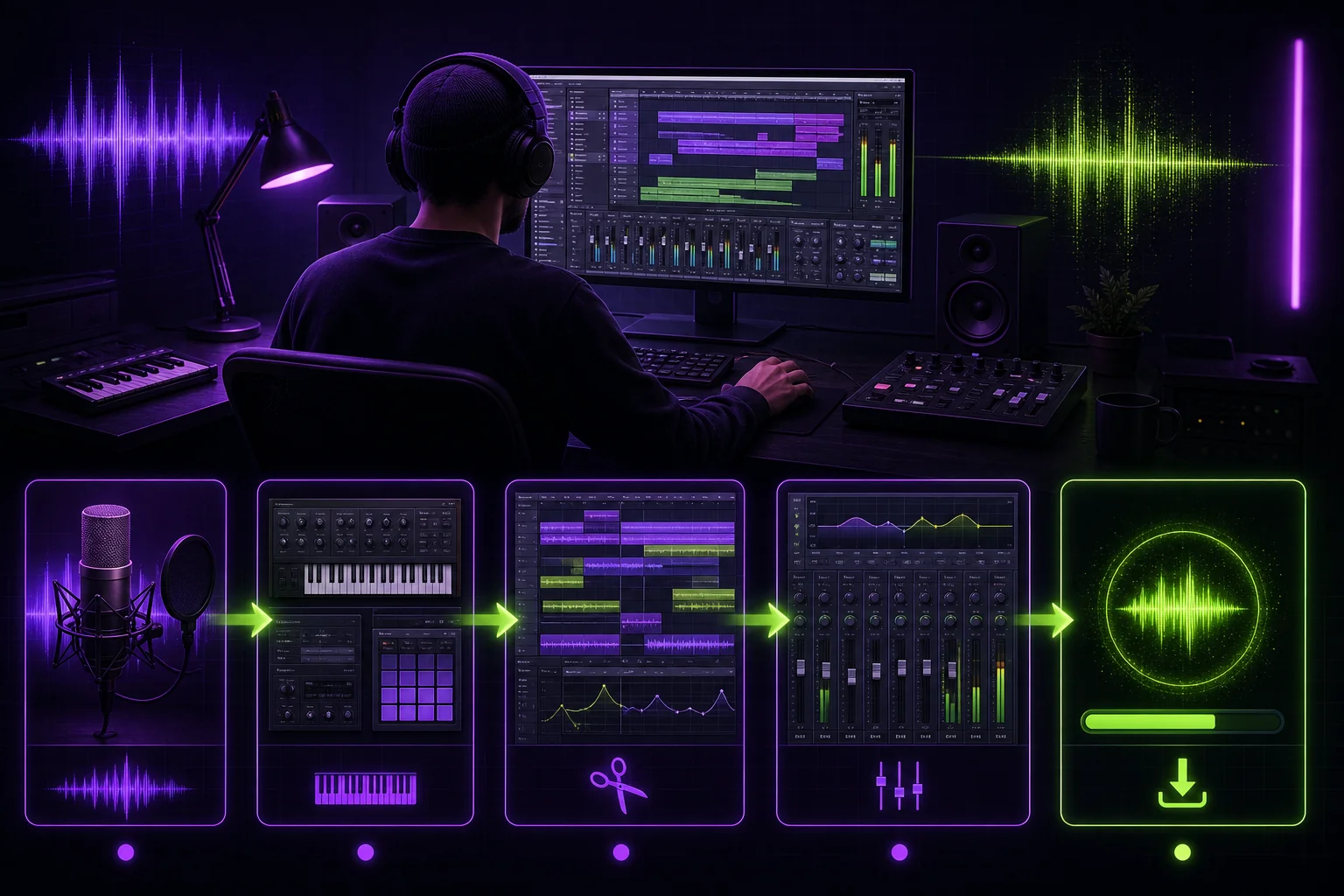
You don't need a $10,000 studio to make music that sounds professional. You need the right setup for your workflow — and if you're collaborating online, that means a few things most home studio guides leave out. This guide covers the gear, the software, and the collaboration layer that turns a bedroom setup into a real online music studio.

How to Choose a Music Collaboration Platform (For How You Actually Make Music)

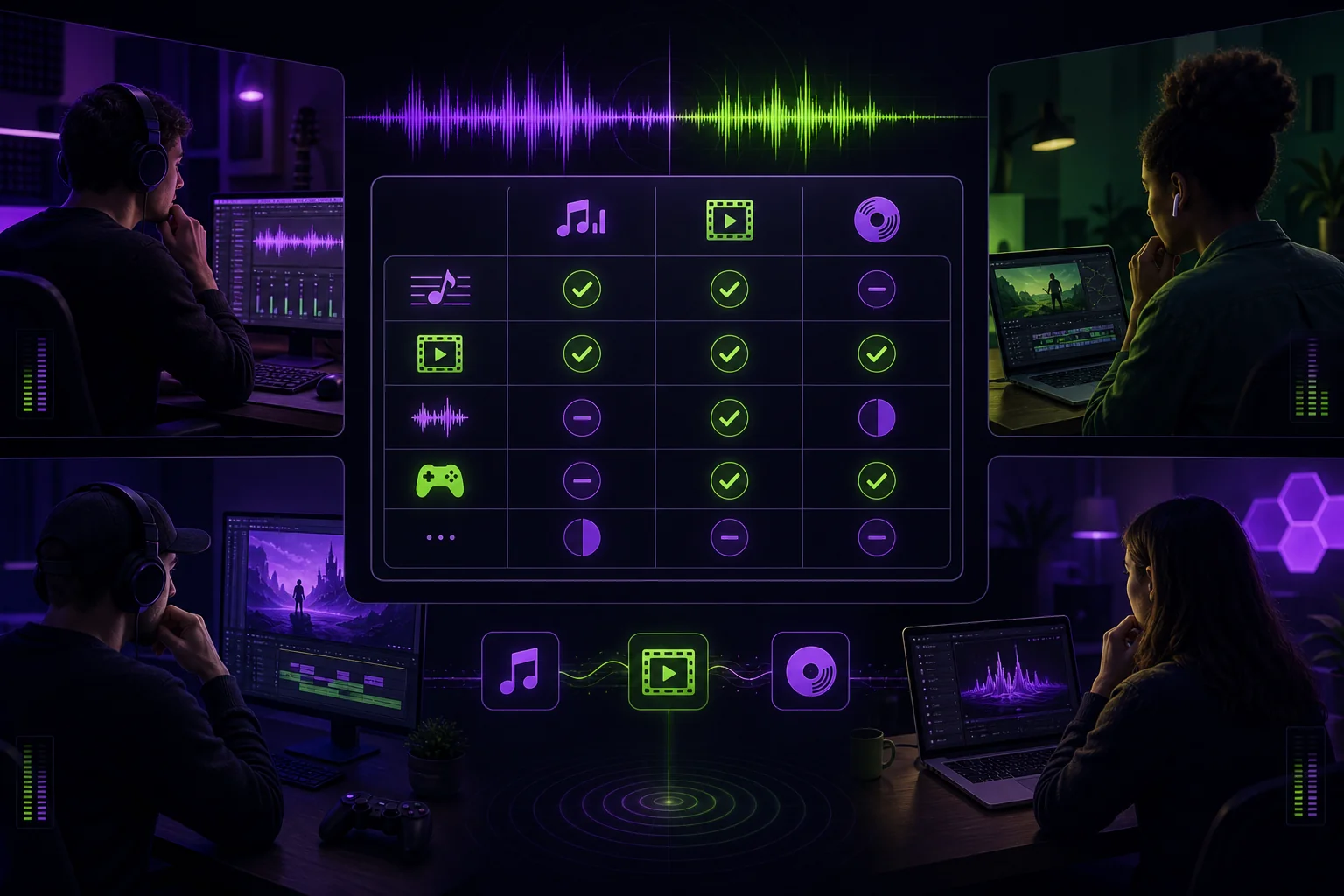
You're looking for a music collaboration platform. You've Googled it. You've found listicles with ten options, comparison tables with checks and crosses, and a Reddit thread where someone swears by a tool you've never heard of. None of it helps because none of it starts with the question that actually matters: how do you make music?

A guitarist who records stems and sends them to a mixer needs something different from a label A&R tracking 30 demos. A band writing an album across three time zones has different needs from a producer hiring session musicians for one track. The right tool depends on your workflow — not on a feature comparison table.

This guide walks through five common collaboration scenarios, what tools actually matter for each, and how to avoid paying for features you'll never use.

Music Label Management Software: How to Run a Label Without Spreadsheets and DMs

Three luminous conveyor streams — contracts, vinyl records, waveforms and faders — converging into a single glowing desk in a dark room, one chair waiting behind it

Most independent labels start the same way: a spreadsheet for tracking releases, a WhatsApp group for artist comms, a Dropbox folder for demos, and an A&R manager who holds it all together through sheer force of will.

This works when you have three artists and six tracks. It collapses when you have ten artists and thirty tracks — each at a different stage, each with different collaborators, each needing different access.

Music label management software exists to solve this. But the category is fragmented: some tools focus on royalties and accounting, others on catalog management, others on the creative pipeline. This guide breaks down what's available, what actually matters for labels, and where the gaps still are.

The 7 Best Music Collaboration Platforms in 2026 (Honest Comparison)

Not every music collaboration platform is built for the same job. Some are designed for quick file sharing between bandmates. Others are full production hubs that track versions, manage permissions, and keep your creative process moving. This guide compares seven platforms across the features that actually matter — not the marketing bullet points.

We tested each platform on five criteria: lossless streaming, version control, per-track permissions, workflow tracking, and DAW project sharing. Here's where they land.

How to Give Feedback on Music Tracks (That Producers Actually Use)

Every producer has received this note: "It feels a bit off. Can you make it pop more?"

No producer has ever found that note useful.

Giving good feedback on music is a skill. It's not about having perfect ears or knowing the technical vocabulary — it's about being specific, actionable, and anchored to what you're actually hearing. This guide covers how to do it, whether you're a label A&R, a bandmate, or a collaborator.

Music Production Software for Teams: The 2026 Buyer's Guide

You're not looking for a DAW. You already have one — probably several, because your guitarist uses Logic, your producer uses Ableton, and your beatmaker won't touch anything but FL Studio. What you're looking for is the layer that sits above the DAW: the tool that lets everyone work together without forcing them onto the same platform.

This guide is for bands, labels, production houses, and any group of people who need to make music together without being in the same room — or the same app.

DAW Project Sharing: How to Send Sessions That Actually Work

A DAW session split into floating translucent layers — waveforms, piano roll, mixer strips — travelling in an arc of light from one studio desk to another

You've been there. You export your Ableton project, zip it, upload it to Drive, send the link. Your collaborator downloads it, extracts it, opens it — and half the samples are missing. The plugin you used isn't installed on their machine. The audio files didn't get collected. They message you: "It says 'media files are missing.'"

Now you're troubleshooting tech instead of making music.

DAW project sharing — sending Logic, Ableton, Pro Tools, or FL Studio sessions between collaborators — is one of those things that should be simple and almost never is. It's the most overlooked part of music file sharing, and it breaks more often than any other step in the collaboration chain. This guide covers how to do it right — DAW by DAW, format by format — so you send sessions that open on the first try.

Remote Music Production: The Complete Collaboration Stack for 2026

A modular synth rack whose glowing patch cables arc across a world map of city lights to plug into small home studios in different cities — the remote music production stack

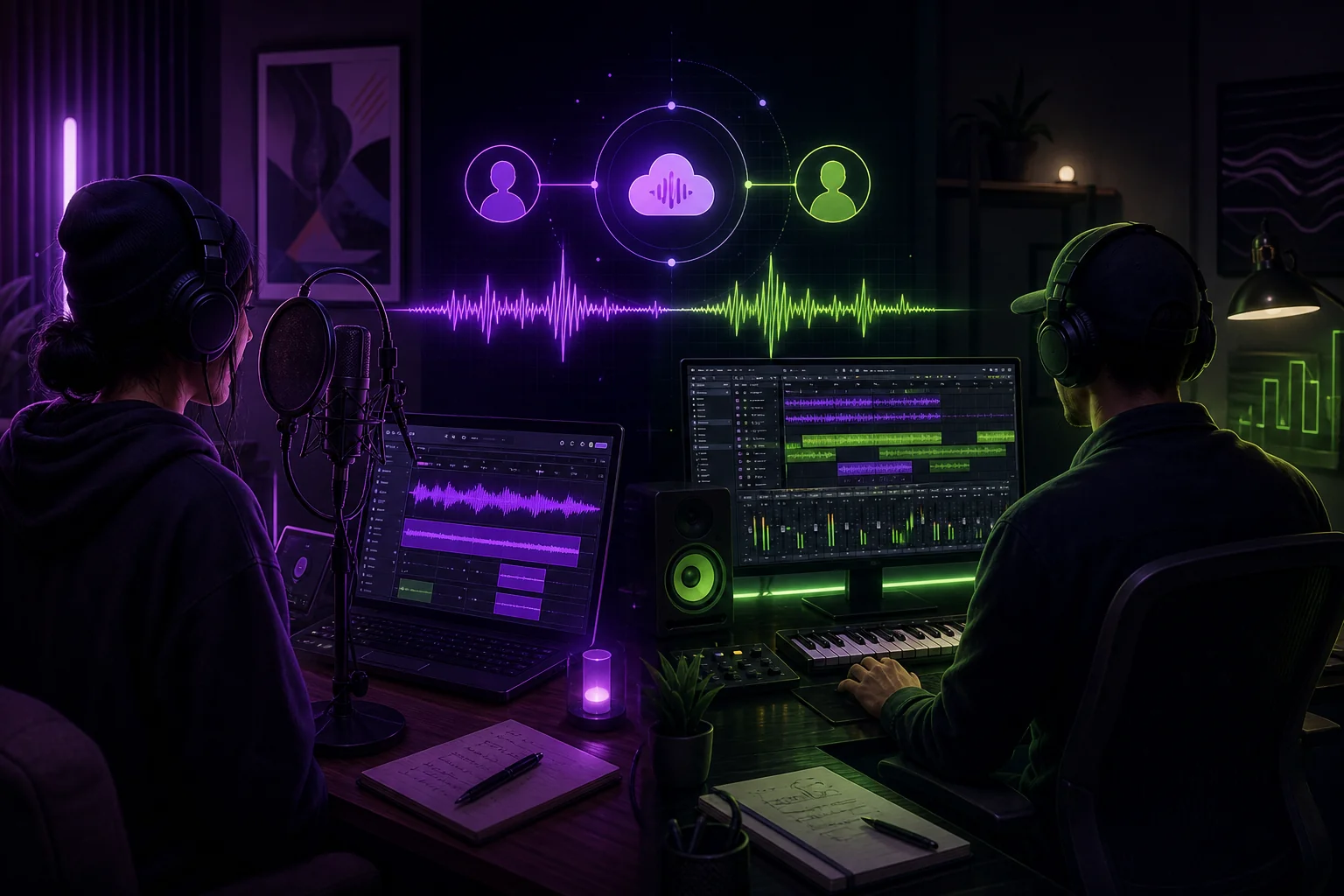
Remote music production went from "nice to have" to "how everyone works" faster than anyone expected. But most musicians are still patching together a workflow from tools that were never designed for music — video calls that compress audio, file transfers that expire, and feedback that disappears into chat threads. Remote music collaboration software exists to solve this, but most people don't know what the full stack looks like.

This guide covers the entire stack: what tools you need at each stage of remote production, how to set them up, and where most remote workflows break down.

AI Music Is Everywhere in 2026 — Here's Why Human Collaboration Still Wins

Endless rows of identical robot musicians blurred in cold light, while two human hands meet in sharp warm focus on the same fader of a mixing console

Two headlines landed in the same 24-hour window last week. The first: Deezer revealed that 43% of new users' playlists contain AI-generated music. The second: Mureka became the first "AI-native" music platform, promising to close the loop from AI creation to AI-powered listening.

Depending on your perspective, this is either the most exciting or the most terrifying time to be a music producer. But buried in the data — and in the reaction from the industry — is a more interesting story: the tools for human collaboration are growing faster than the tools for AI replacement.

Here's what the numbers actually tell us.